EXHIBITION EL ZAGUÁN
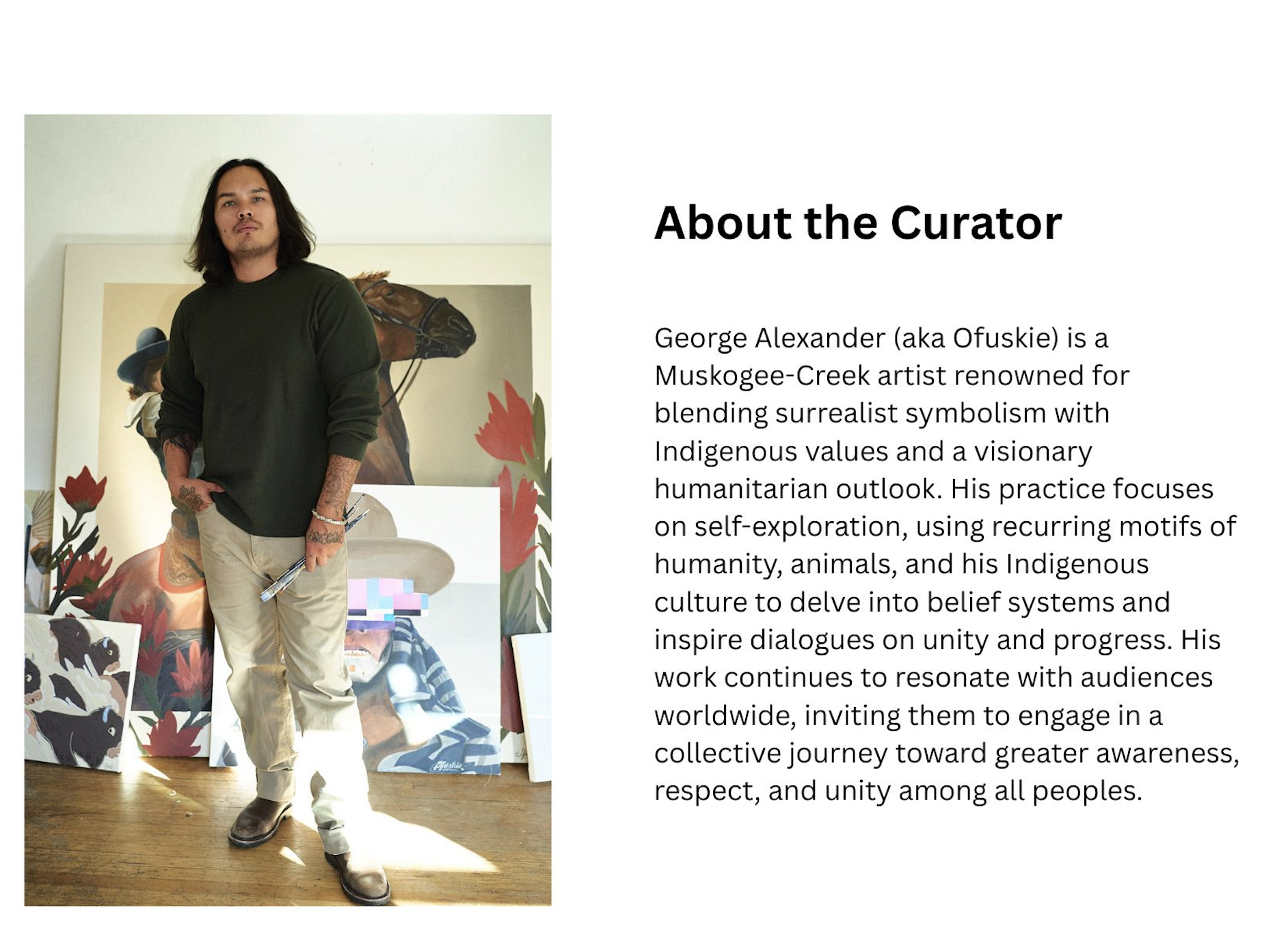
Thunderbird Rising: A group exhibition, curated by George Alexander
ARTIST RECEPTION FRIDAY, July 31, 2026 | 5-7 PM | EXHIBITION IS ON VIEW THROUGH SATURDAY, August 22, 2026
AT HSFF’S EL ZAGUÁN, 545 CANYON ROAD, SANTA FE, NEW MEXICO
ARTIST CONVERSATION SATURDAY, AUGUST 22 | 2-3 PM.
This program is complimentary, but seating is limited. Please register in advance to reserve your spot.
SIGN UP HERE
Group Exhibition
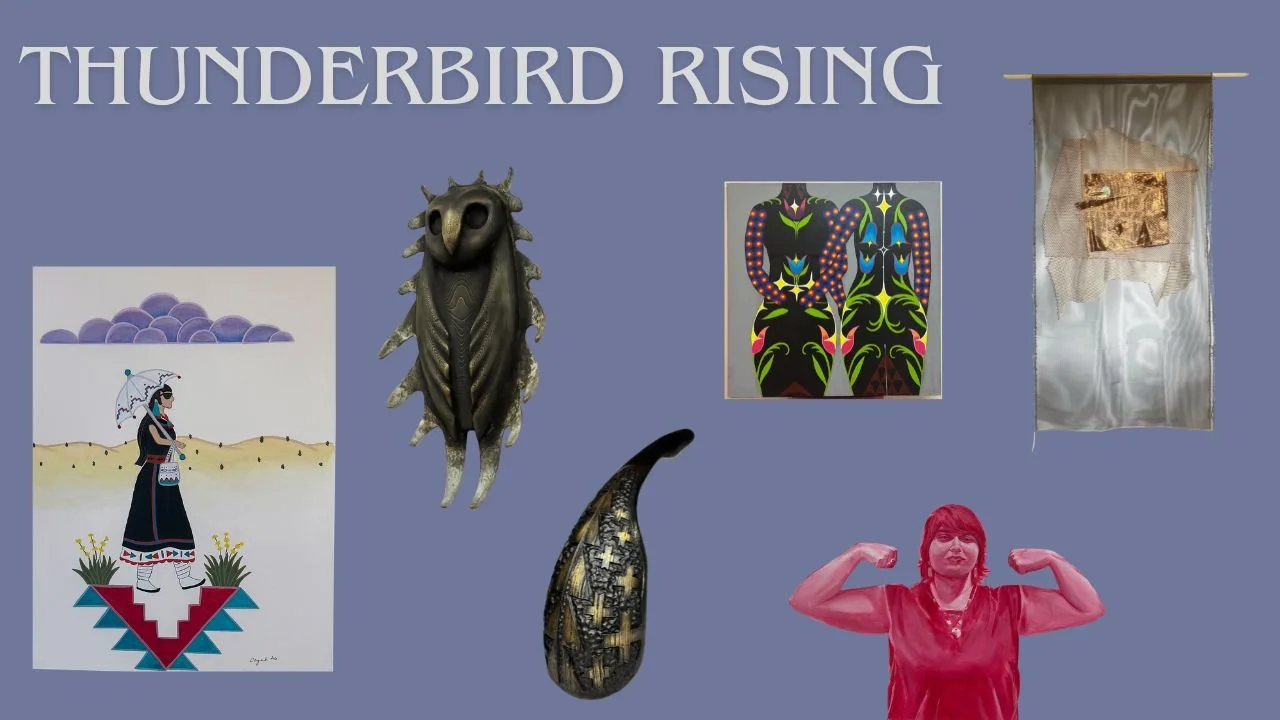
Historic Santa Fe Foundation presents Thunderbird Rising, a group exhibition of artists from the Institute of American Indian Arts (IAIA) co-curated by artist George Alexander. The exhibition will be on view at the Gallery at El Zaguán on Canyon Road, July 31 through August 22, 2026.
The selected works ground contemporary concepts in a range of physical materials, creative processes, and artistic disciplines. The collection spans traditional and modern mediums, balancing painting, drawing, textiles and illustration alongside sculpture and installation.
Through these diverse forms, the makers look closely at complex modern realities, cultural identities, memories and ancestral knowledge. The conceptual depth of the exhibition focuses on storytelling, cultural memory, and varying approaches to intergenerational connection and healing. Other works confront modern challenges—such as global light pollution and the consequences of colonialism—while others honor contemporary design and tradition, spirituality, and philosophy. A full description of each project can be found in the artist section below.
Join us for the opening reception on Friday, July 31, from 5-7 pm.
In celebration of the exhibition, HSFF will host our 2nd Annual Garden To Table Dinner on Thursday, August 6. This ticketed fundraising dinner benefits the Historic Santa Fe Foundation and honors the featured artists. Guests will enjoy a private tour of the exhibition led by co-curated artist George Alexander. Read more here.
Contact: Anne Kelly at anne@historicsantafe.org or call 505.983.2567 for more information.
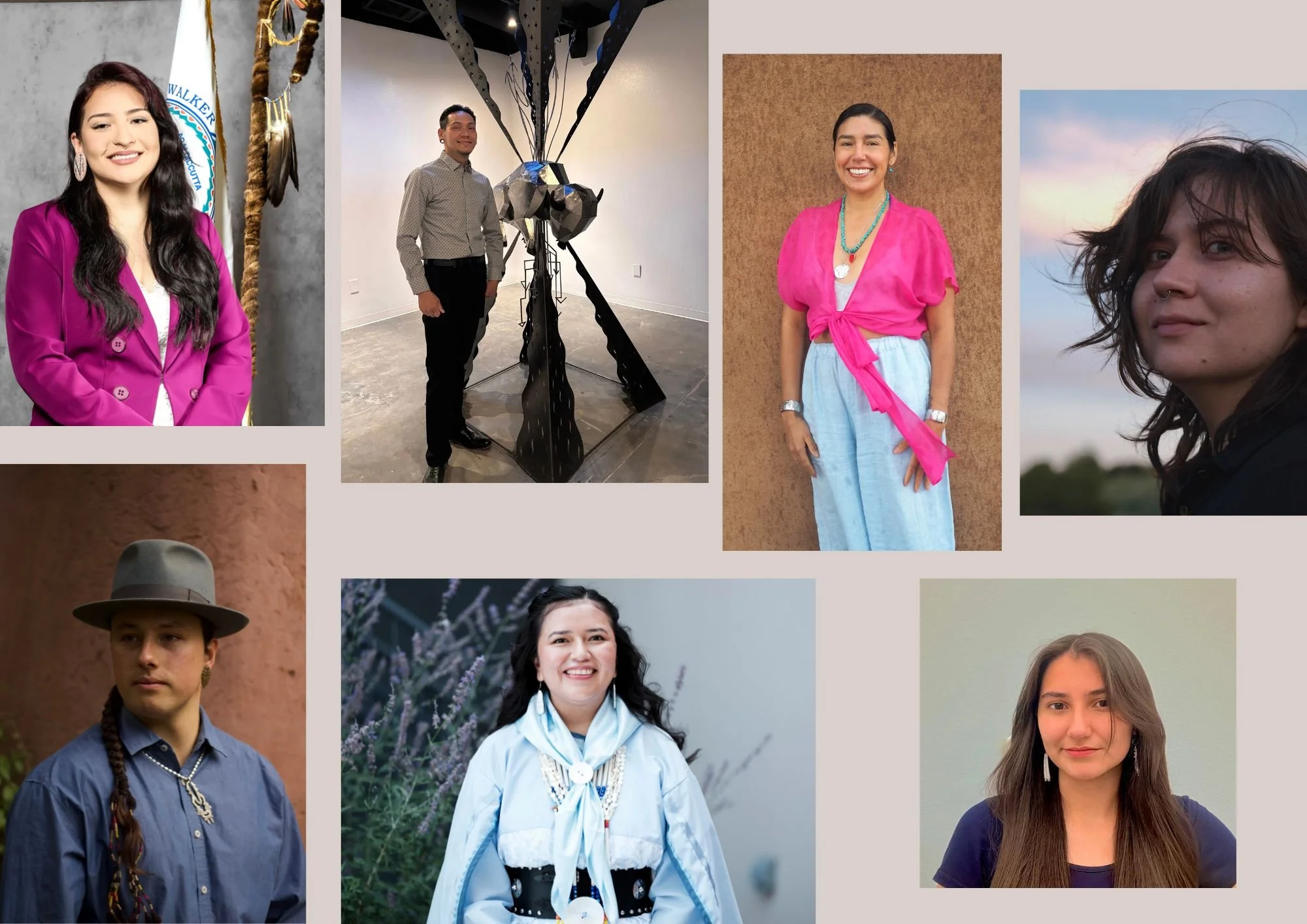
About the Artists:
Brynn Torres
Bio: Brynn Torres is a painter and tattoo artist from the Walker River Paiute Tribe in Northern Nevada (Agai Dicutta / Trout Eaters). Working fluidly across canvas and skin, Torres utilizes bright colors, geometric patterns, and symbolic shapes to construct striking visual landscapes that immediately capture the viewer’s eye.
Artist Statement: My featured work explores the visual concept of a full-body blackout tattoo mapped onto my own form. This piece directly adapts the repeating, symbolic motifs and vivid acrylic palettes that define my ongoing tattoo and painting practices.
Celia Calabaza
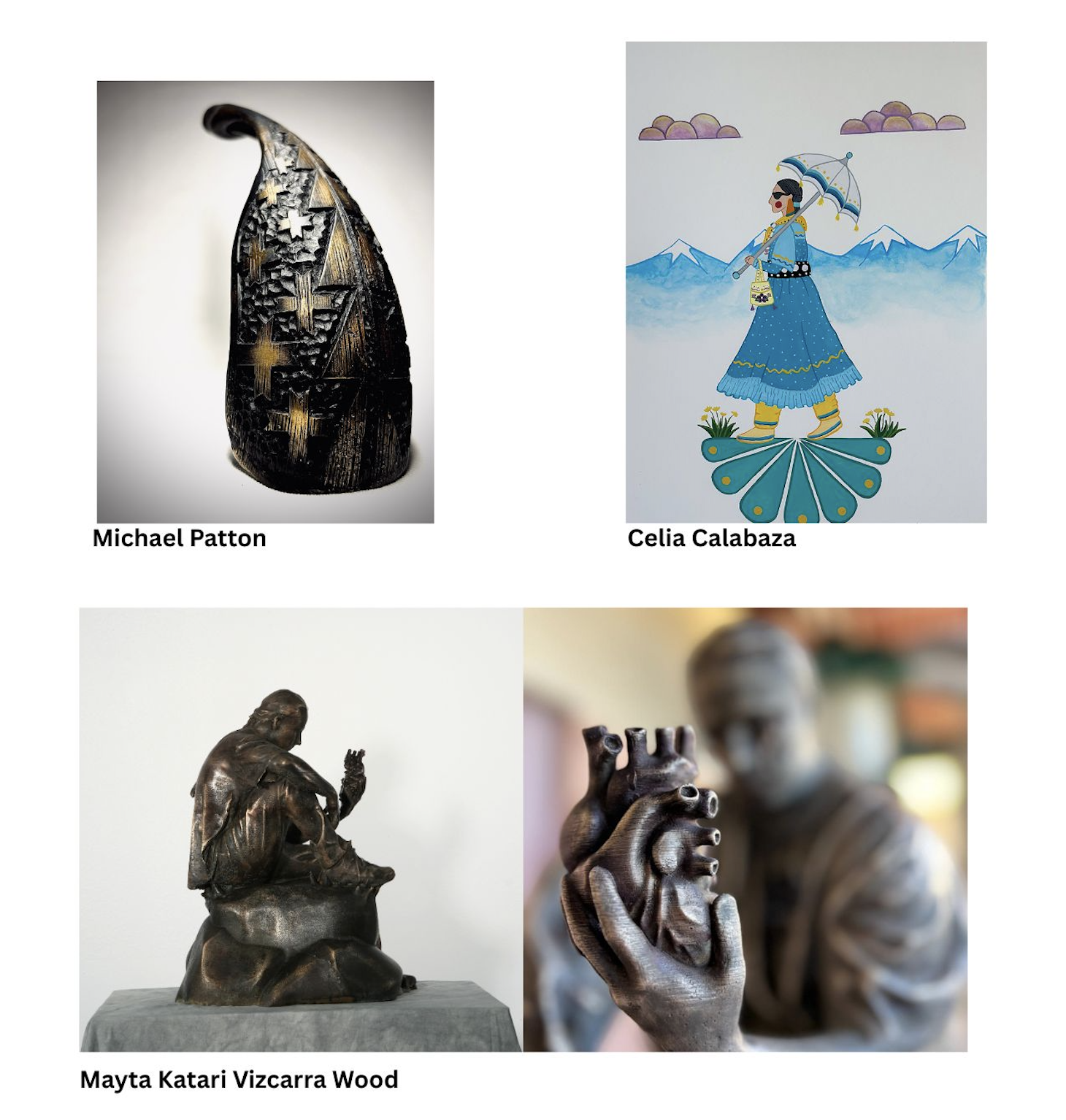
Bio: Celia Calabaza was raised on the Jicarilla Apache reservation in Dulce, New Mexico, and carries dual Jicarilla Apache and Santo Domingo (Kewa) Pueblo cultural traditions. She earned her Bachelor of Fine Arts in Studio Arts (with an emphasis in Painting) and an Associate of Fine Arts in Indigenous Liberal Studies from the Institute of American Indian Arts (IAIA). A recipient of prestigious honors, including the Brenda Julian Fine Arts and Los Alamos National Laboratory Career Pathways Scholarships, Calabaza plans to continue her education in the graduate Art Studio program at the University of New Mexico. Her practice spans painting, drawing, digital illustration, and printmaking.
Artist Statement: Centering on storytelling, cultural identity, and lived experience, my practice reflects deeply on themes of healing and intergenerational connection. Rooted in my dual Jicarilla Apache and Kewa Pueblo heritage, my figurative and narrative imagery emphasizes character, movement, and symbolism. I believe in the responsibility to create art with care and intention, creating compositions that invite a shared sense of recognition and memory while continually evolving my visual language.
Cedar Rose
Bio: Cedar Rose is an interdisciplinary Indigenous artist from Santa Fe, located within the traditional Tewa Territory of northern New Mexico. She is Holikachuk Dene (Athabaskan) and Diné (Navajo). Blending an array of materials including textiles, photography, paper ephemera, and found objects, her practice encompasses clothing design, collage, installation, and assemblage. Involved in performance art since childhood, she is one of five founding members of a collaborative performance art troupe in Santa Fe. Rose earned a Bachelor’s degree in Business Administration from Fort Lewis College in 2015 and her Master of Fine Arts in Studio Arts from the Institute of American Indian Arts (IAIA) in 2026. Having lived and worked as both a creative and business professional across the East and West coasts, she now resides in her hometown of Santa Fe.
Artist Statement: My work explores themes of identity, relation, belonging, and memory through the lens of my relationships to my parents and ancestors via the material belongings they have created and collected. Through my art, I navigate these relationships by piecing together fragments of memory using my own collected and inherited textiles, attempting to make sense of my place within the Indigenous community. By utilizing these materials, I confront the deep sentimental attachments I feel to my family's ancestral stories. I engage in slow, methodical, and repetitive processes like stitching, beading, and weaving, which prompt me to remain present and mindful of the emotions these items recall. Ultimately, my work strives to gently navigate and process painful family histories, continuing a journey of generational healing initiated by those who came before me in hopes that it resonates with others processing the complex legacies of settler-colonialism.
Isabella “Izzy” Mondragón
Bio: Isabella “Izzy” Mondragón is an award-winning, Two-Spirit interdisciplinary artist and enrolled member of the Chickasaw Nation of Chickasaw and Xicana Purepecha heritage. Born on a U.S. Naval base in Japan and raised in military environments across Italy and Washington state, Mondragón will complete their Studio Arts BFA at IAIA in 2027. An alumnus of the Emerging Leaders in the Arts Fellowship—where they curated the exhibition Visions of Us—Mondragón has presented research on "Reciprocity through Portraiture and Muralism" at the Harvard Divinity School. Following a 2025 SWAIA internship and an exhibition spot during Indian Market weekend, Mondragón was selected for the 2026 Summer Undergraduate Residency Program at the New York Academy of Art.
Artist Statement: As a multidisciplinary queer creator working across painting, murals, photography, textiles, and printmaking, I choose to respond with beauty to the silenced, intergenerational traumas found within borderland, immigrant, and military-service families. Working from a place of deep love and honor for my ancestors, matriarchs, and Two-Spirit community leaders, I utilize portraiture and mixed media to pass on ancestral teachings and invite collective healing.
Mayta Katari Vizcarra Wood
Bio: Mayta Katari Vizcarra Wood is a Quechua artist from Cusco, Peru, currently pursuing his BFA at the Institute of American Indian Arts. As an active member of the Ñawpa Ñan cultural community of the Kusi Kawsay Association, Vizcarra Wood participates closely in his cultural traditions, seamlessly blending modern digital technology with traditional, ancestral Andean aesthetics. His artistic expression focuses primarily on jewelry and cast bronze sculpture.
Artist Statement: My practice aims to communicate the beauty of my culture, uplift Indigenous worldviews, and address the ongoing consequences of colonialism. In this exhibition, I am showcasing two cast bronze sculptures. Spirit Messenger represents the owl—the sacred night observer and astronomer in Quechua culture—embodied as a symbol of wisdom revealing the stellar calendars that guide life. Eternal Search examines a modern, generational struggle: the endless pursuit of love, validation, and security through cellular technology and social media. Featuring a figure holding a heart that morphs into a smartphone, the sculpture questions how digital dependency shapes consciousness and erodes personal and cultural relationships within the web of life.
Michael Patton (Michael Calico)
Bio: Born and raised on the Pine Ridge Indian Reservation in South Dakota, Michael Patton (who also creates under the name Michael Calico) is an enrolled member of the Oglála Lakȟóta Nation and a descendant of the Isleta Pueblo people. Patton’s multidisciplinary practice spans metal fabrication, graphic design, serigraphy, and cultural arts. His work extends far beyond object-making into community building and cultural stewardship, including independently designing apparel to support grassroots poetry, organizing collaborative artist gatherings, and facilitating after-school youth arts programs.
Artist Statement: Drawing from Lakȟóta spirituality and philosophy, I approach the creative process as an active ceremonial practice. My featured installation explores the composition of the Lakota vortex ("as above, so below") centered around the pivotal figure of a Buffalo (pte oyate). The suspension shapes and intricate lines emanating from the center represent the profound, life-giving sacrifice the Buffalo brings to the nations of the Great Plains, beautifully balancing the physical and spiritual realms through deep cultural roots.
Tru West
Bio: Tru West is a Diné (Navajo) environmental advocate, storyteller, and an alumnus of the Institute of American Indian Arts, where she earned her Bachelor’s degree in Museum Studies. Her academic leadership earned her the National Indigenous Recognition Award in 2022, and she was selected as a 2025–2026 Correspondent with the University of Arizona's Ilíiaitchik Program, as well as a 2026 Planet Forward Multimedia Journalism Finalist. Her passion for environmental communication extends into community volunteerism, multimedia journalism, local hiking, and global travel.
Artist Statement: My work focuses on increasing public awareness of environmental issues and climate change by creating interactive, accessible multimedia displays and museum installations. This featured installation confronts the rapid global expansion of light pollution, an environmental crisis separating human mammals and microscopic life alike from the natural night sky. Using a base of repurposed campus cardboard as a nod to relentless consumerism, I hand-poked thousands of pinholes into the map using satellite imagery to represent illuminated global cities. The piece serves as a stark, tactile reminder that as we lose access to the stars, we risk detaching ourselves from our environment, challenging viewers to actively preserve the night.
Contact: Anne Kelly at anne@historicsantafe.org or call 505.983.2567 for more information.
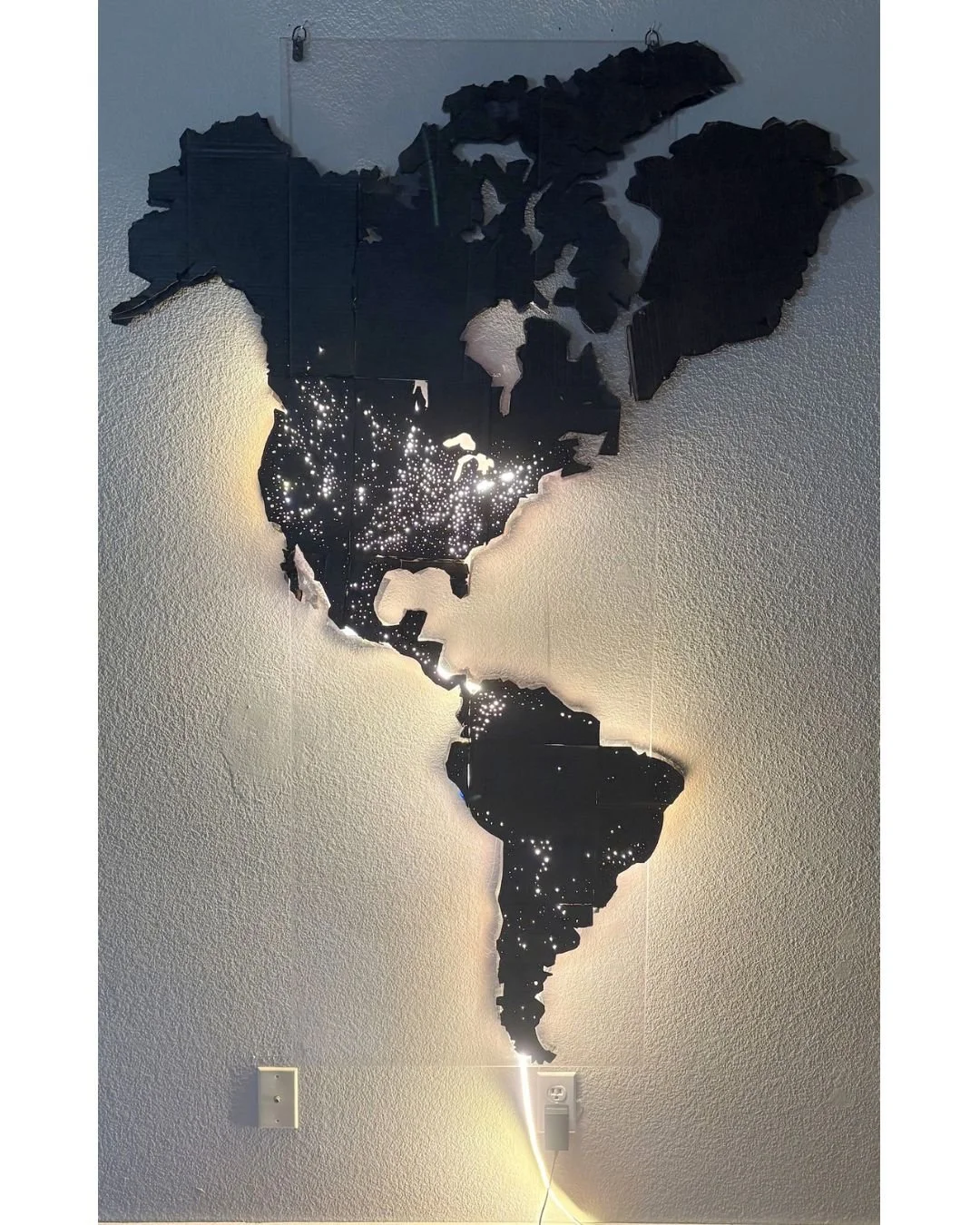
© 2026 Tru West