
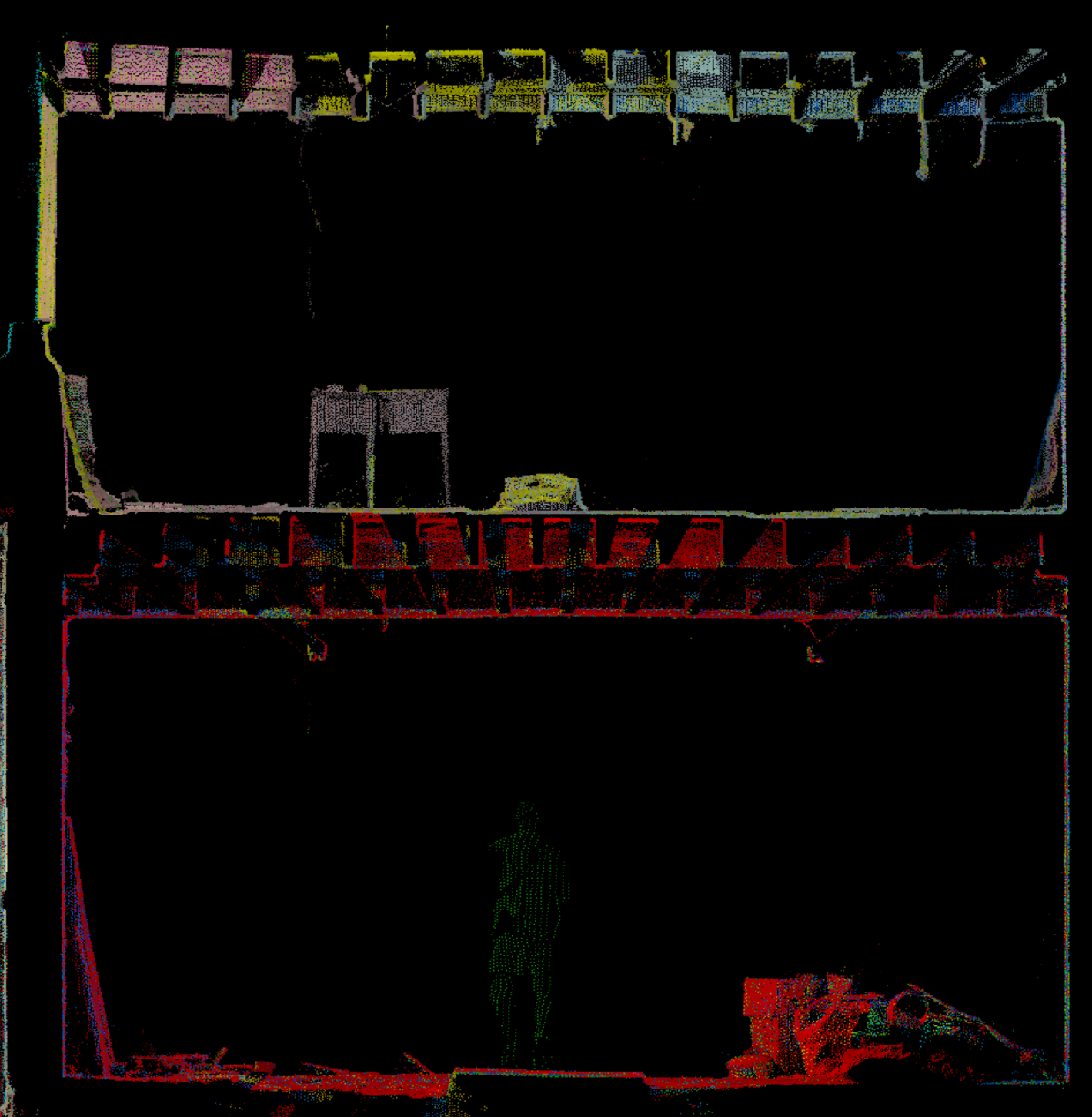
Exhibition at the Eugene and Clare Thaw Research and Education Center at the Edwin Brooks House
Historic Santa Fe Foundation Presents: Viewing the World Through a Different Lens
by Scott Ernst
Opening Friday, August 28 | 5-7 PM. On view through November 13, 2026
At the Thaw Education & Research Center in the Edwin Brooks House
553 Canyon Road, Santa Fe, NM 87501
Open Hours Mondays and Fridays 10-3, or by appointment.
Contact research@historicsantafe.org to schedule an appointment.
About the Exhibition
As the owner of Southwest Scanning, Scott Ernst documents heritage as well as
contemporary buildings using several 3D Digital Documentation technologies
which allow him to capture virtual replicas of structures and bring them back to
the office. The typical goal is to use these models to generate as-built drawings
for restoration, adaptive reuse, or engineering analysis. Creating these drawings
involves working with the models in different software packages, clipping them
into segments to isolate particular areas in the models and view them in different
ways.
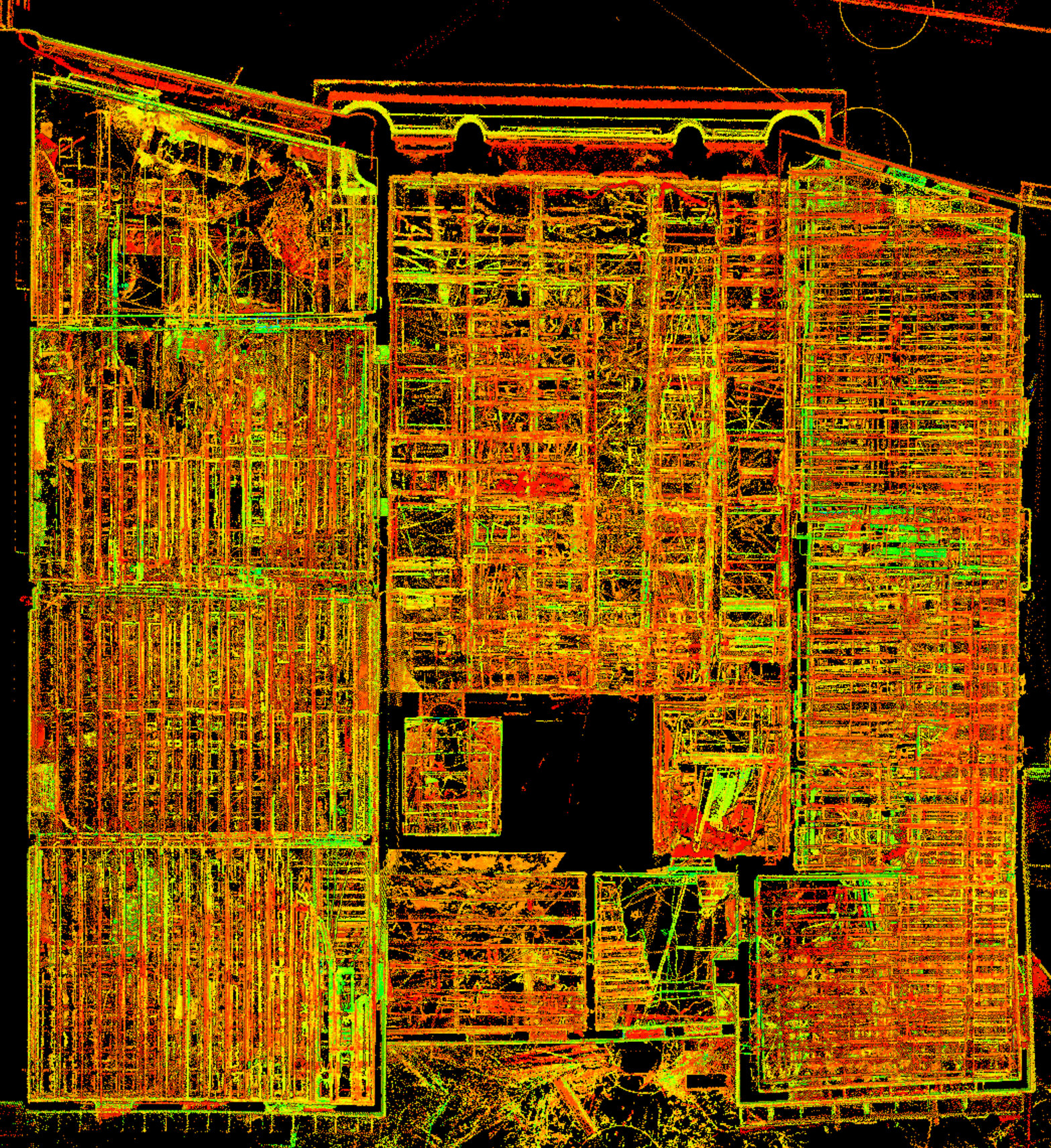
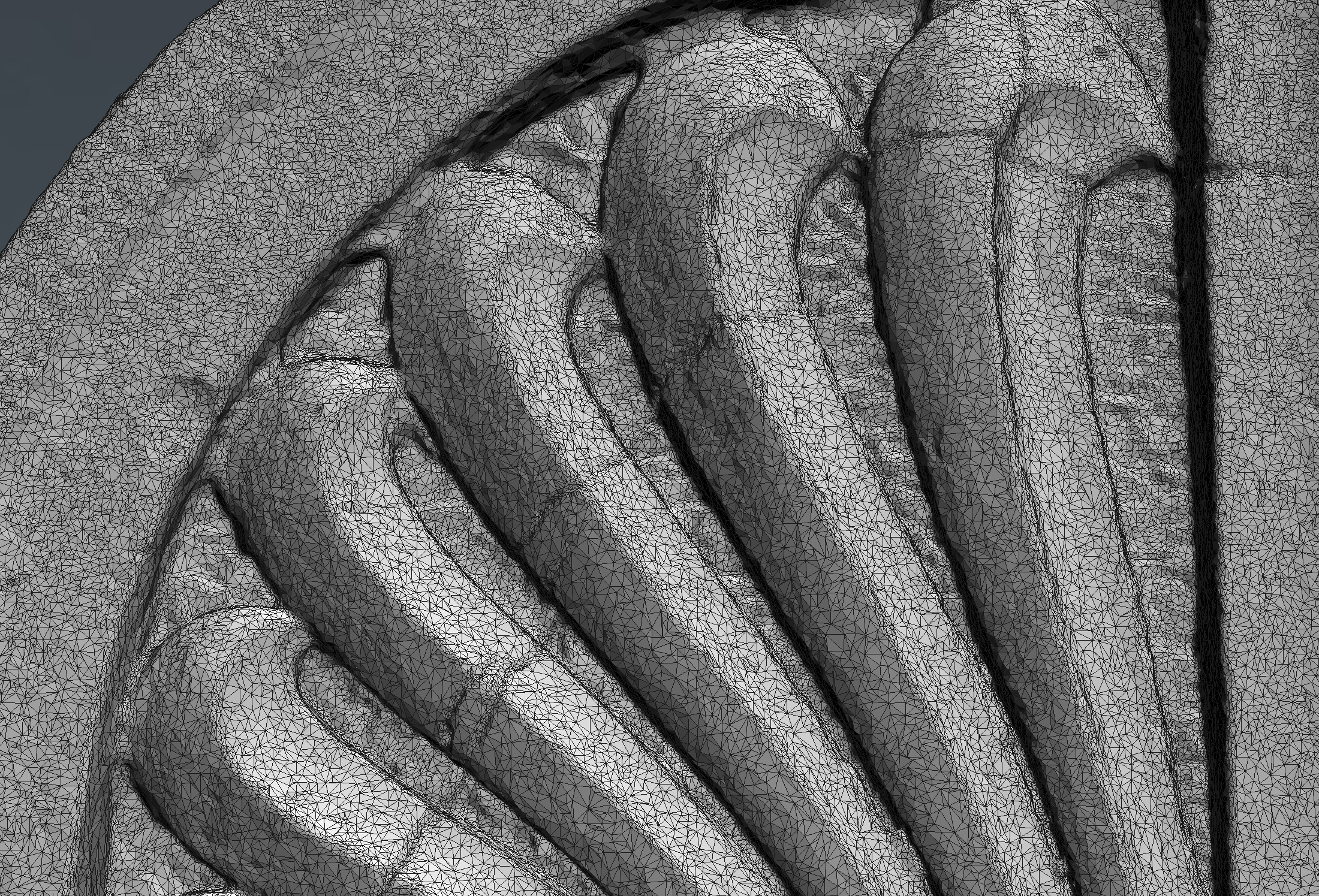
Over the years, Scott has discovered that there is beauty to be found and and there
are stories to be told about the history of the buildings within those scans. From
incidental portraits and timelines of cultural changes, deterioration and rebirth;
to abstract washes of color, this exhibit will show some of these hidden stories.
About the artist
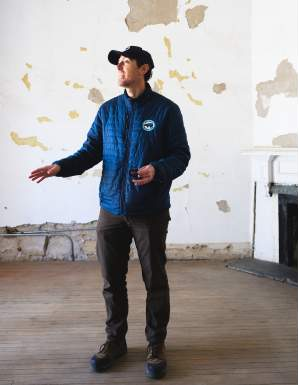
Scott Ernst has been working in the preservation field, as both a craftsman
and digital documentarian since 2009. Working extensively in New Mexico
and across the American West he has been involved in projects ranging from
the replication of traditional window sashes to the documentation of historic
commercial buildings, churches and environmental sculptures as well as early
twentieth century, timber framed mine structures.
Whether he is spending a day or two scanning an historic adobe in Santa Fe
or camping for several weeks alongside a c. 1905 ore tramway in Death
Valley, Scott finds that the work allows him the time to think about the
people who built these things, wonder about the times they lived in, the
technologies that they lived with and to see the subject in deeper ways than if
he were a casual visitor.
Special Programming: A Conversation with the Artist
September 14, 2026 | 3:00 PM
Join us for a special presentation by Scott Ernst. Ernst will talk about his pieces, giving insight into the processes and the role of these technologies in historic preservation. The talk will take place among the exhibit, at 553 Canyon Road, Santa Fe, NM 87501.
Free for members and $10 for non-members.
New Mexico Historic Sites and 3D Technologies
A Salon Talk by Bethany Tabor and Oliver Horn
Thursday, October 15, 3pm
Thaw Education Center
553 Canyon Road
Free for members and $10 for non-members.
ABOUT THE SALON
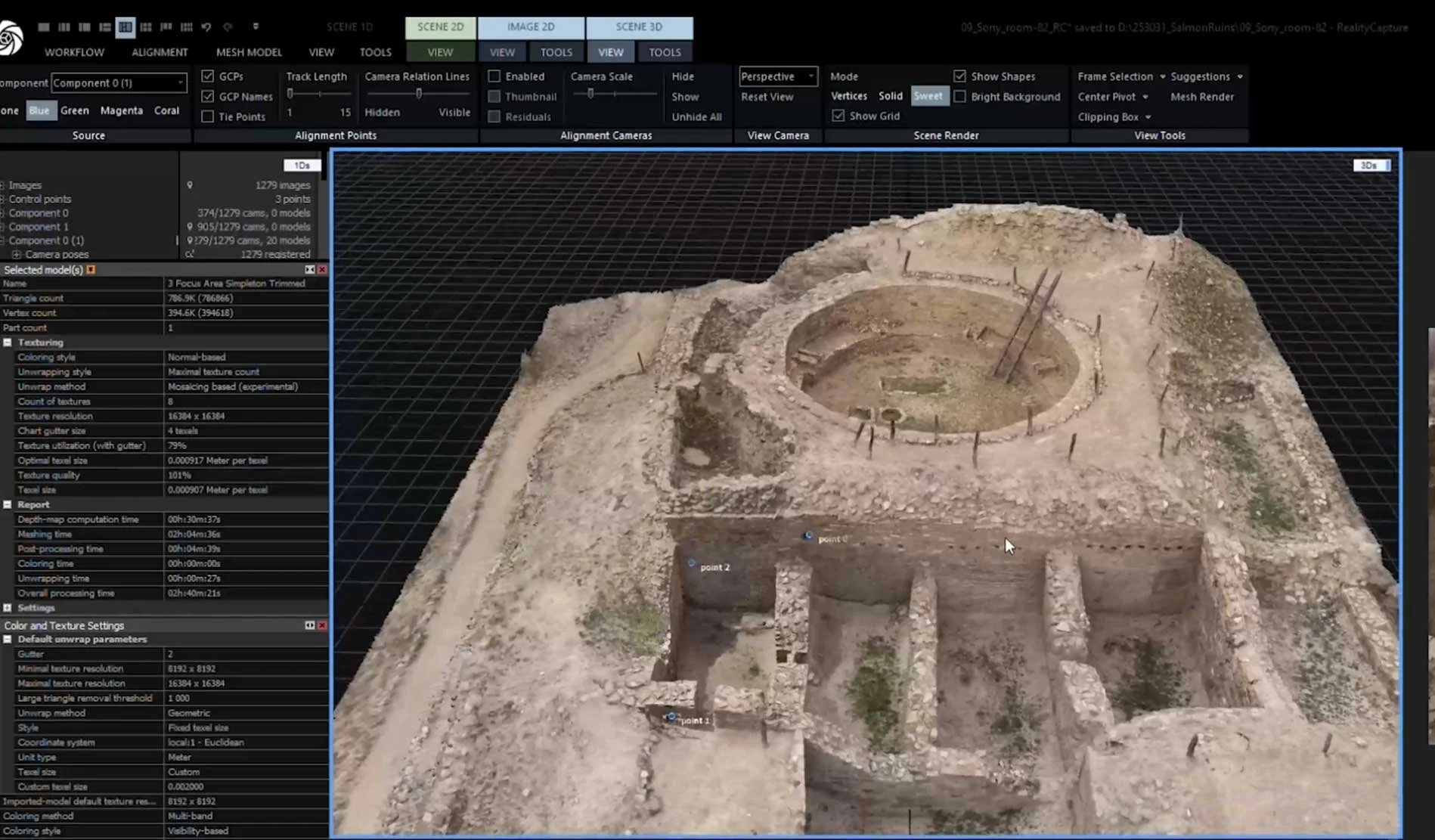
Join us for a joint presentation by Bethany Tabor and Oliver Horn on October 15, 2026. Tabor will talk about her project Cultural Scans for Interactive 3D Experiences (SITEs), a digital historic preservation project that took place in New Mexico between 2023 and 2025. It was a partnership between the New Mexico Humanities Council and Northrop Grumman's Technology for Conservation initiative that set out to leverage cutting-edge technology for cultural heritage and conservation. Horn will talk about Cultural SITEs work in Lincoln and how the final products have assisted in historic preservation of their historic sites.
Cultural SITEs collected digital scans of 5 different historic sites and monuments in New Mexico and translated them into various forms of 3D models all used for different research, preservation and public engagement purposes. The data collection methods included photogrammetry, full panoramic imaging, Light Detection and Ranging (LiDAR), ground penetrating radar (GPR) and magnetometry, with outputs ranging from LiDAR point cloud models, digital reconstructions, 3D prints, immersive VR/AR experiences, radiance field models and virtual museum exhibits. The monuments scanned included Territorial Era forts and county buildings; 16th century pueblos; Spanish Colonial structures; and Pre-Contact Indigenous structures that range from fully excavated to fully subterranean. While some output was used for internal research purposes, other scans created immersive and interactive models that allowed the sites to expand their educational programs and public accessibility. With such a diversity of digital imaging tools, the possibilities for further research and interpretation were numerous.
What began as an effort to create sophisticated digital records of the sites' histories grew into an interactive archive of digital storytelling that speaks to the range of civilizations that have occupied this place.
ABOUT THE SPEAKERS
Bethany Tabor is a multidisciplinary researcher, writer and public engagement specialist based in New Mexico. Her work ranges from producing large-scale public events to facilitating panel conversations to project management to writing for arts-based publications.
Tabor's research and writing focuses on place-based cultural practices; performance and time-based media; somatic inquiry and considerations of the body in context. As a lifelong dancer turned movement researcher, Tabor's diverse career projects are all linked by her principal investigation of the body and its relationship to individual consciousness, life cycles, community, the natural and built environments, data and technological progress.
Her career has spanned 10 years in the nonprofit arts and culture sector beginning in Brooklyn, NY where she worked as Tech Lab Manager and Head of Public Programs at Pioneer Works. While in New York, Tabor worked with artists across a range of practices helping them to develop projects, installations and workshops geared toward community access and interaction. She worked most closely with creative technologists and artists specializing in emergent media and interactive technology. In 2020, she relocated back to her hometown of Albuquerque, NM to continue this work at the New Mexico Humanities Council as Senior Program Officer. For the NMHC, she managed public programs for their Digital Humanities initiative. Her work there was dedicated to bridging the gap between Humanities scholarship and innovations in digital technology and emergent media.
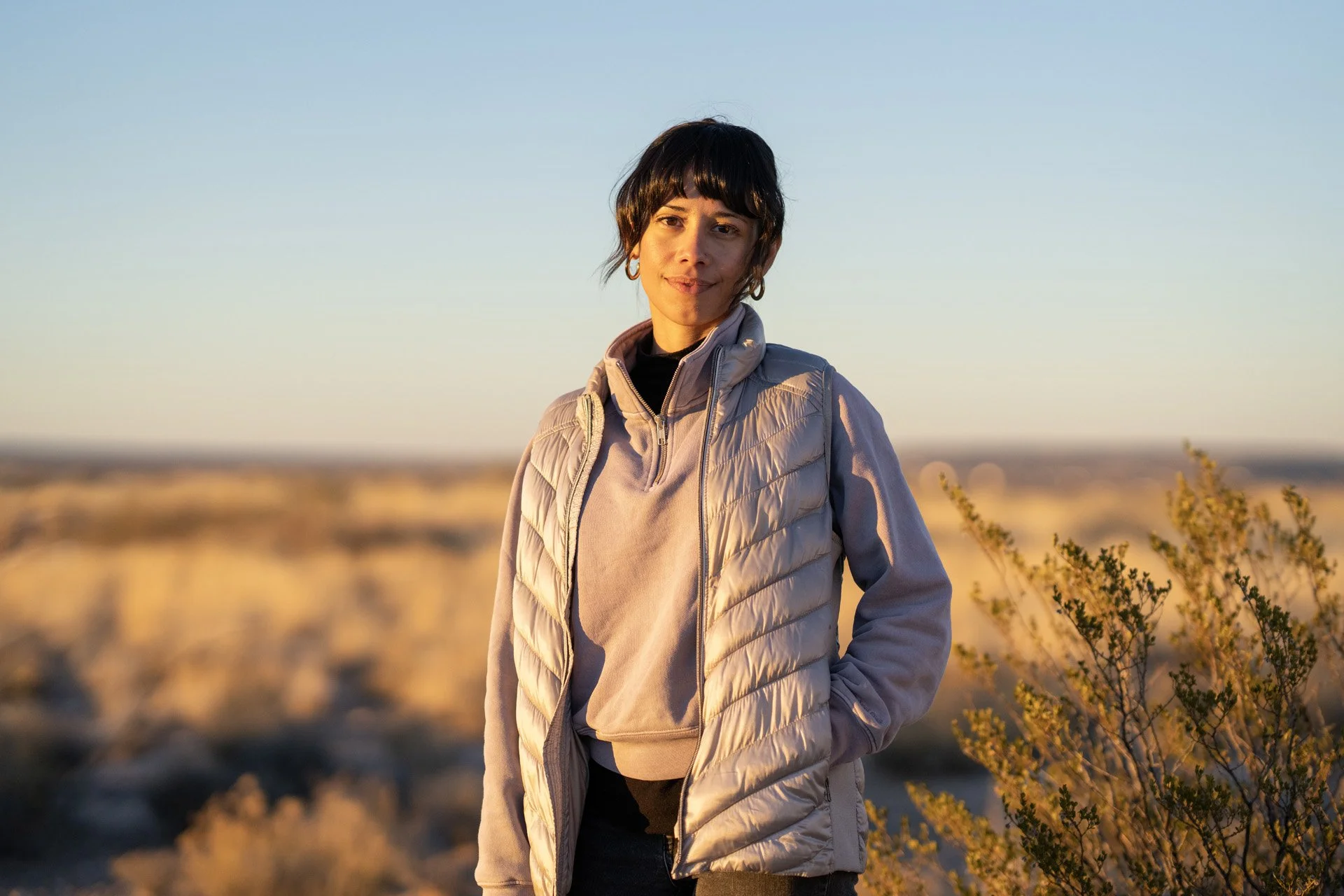
Oliver Horn is the Regional Manager of the Lincoln and Fort Stanton Historic Sites. Over the past three years, he has overseen nearly $10 million in historic preservation work, infrastructure upgrades, and fire mitigation projects at both sites. He received the State of New Mexico's 2026 Architectural Heritage Preservation Award for restoration work at Fort Stanton. He coauthored the current New Mexico Historic Preservation Plan. Has most recently written, "The Loss of the Commons: A Historic Context for the Hermit’s Peak/Calf Canyon Fire," about the history of land grant communities and the rise of super fires in New Mexico. He received his Ph.D. in U.S. International History from Georgetown University in 2018.