A Transformation of Indigenous Mythologies in New Mexico: How did Spanish Colonization in the 17th Century Transform Indigenous Mythologies?
Flavia Fernandez
Through missionary efforts, religious conversion and suppression of native rituals, Spanish Colonizers reshaped Indigenous mythologies in 17th century New Mexico, blended Christian morality tales with Indigenous cosmology to create hybrid legends.
This paper, which explores how traditional indigenous legends and how they were transformed under Spanish Colonialism in 17th century New Mexico, has revealed a lot about the syncretism of multiple cultures and the effects of large-scale power imbalances. It is yet another example of how incredibly detrimental the weaponization of cultural elements, heritage, and beliefs can be.
Stories that run deep in New Mexico, like La Llorna, have their roots in Indigenous stories of water deities and spirits, and the Spanish colonial demonization of non-Christian deities has turned trickster figure, like the Navajo character of the coyote, into El Diablo and El Malo, all while erasing their original indigenous values of balance, mischief, and defiance into a catholic binary of good and evil. Although some artifacts and traditions have survived, such as Kachina dolls, Catholic symbolism, altered calendars, and moral binaries remaining embedded has created a new context of a syncretic system shaped by colonial trauma and adaptation.
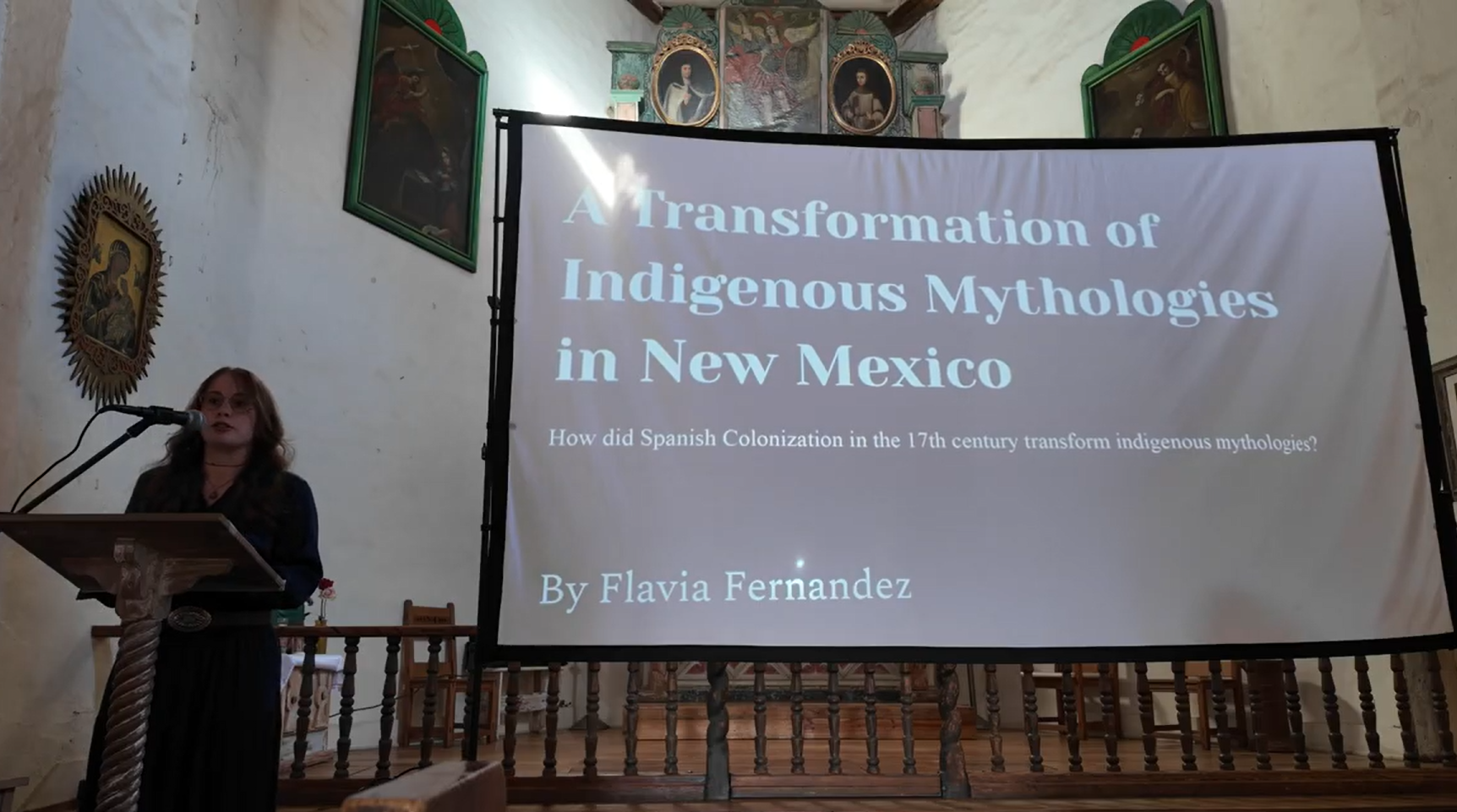
Flavia Fernandez is one of the ‘25-’26 HSFF High School Research Fellowship. She is part of the Mandela International Magnet School’s Class of ‘27. After graduation, her dream has always been to go to MIT, become an engineer, and eventually, a teacher. Outside of school, she pursues lots of other passions. She plays on Santa Fe High’s varsity tennis team, is the captain of her school’s STEM team, participates in Model UN, Student Council, Global Santa Fe, and of course attends the fellowship at HSFF.
To view her presentation click the link here: video link.