The Promise of New Mexico
The Impact of the Tuberculosis Epidemic and the Sanatorium Movement on the Development of the State
Gabriel Bleichmar
Between the 1880s and 1950s, the tuberculosis epidemic that swept through the United States would serve to catalyze the development of New Mexico, as many traveled to the territory for its reputation of fresh, clean air, and to seek healing in sanatoriums. The sudden population boost, primarily of new white settlers to a place dominated by hispanic and indigenous people, significantly aided New Mexico’s bid for statehood, an effort that would ultimately succeed in 1912 during the height of the epidemic. Sanatoriums across the state served to transform health seeking visitors into permanent residents, and helped foster a love for the state among patients. This was perhaps best showcased at Sunmount Sanatorium in Santa Fe, in the programs implemented there by Doctor Frank Mera. Through talks on New Mexico culture, and excursions to important sites such as Taos and Acoma pueblos, Dr. Mera made patients feel at home and attached to New Mexico, causing many to settle as opposed to simply move away after treatment. Finally, many sanatoriums, Sunmount in particular, concentrated important and influential figures in the same place, fostering longtime friendships and partnerships. The sanatoriums placed influential people such as painter Carlos Vierra, anthropologist Edgar Lee Hewit, and architects John Gaw Meem and Katherine Stinson Otero and in the same circles, contributing to both the architectural development and historical preservation of the state. Ultimately, the tuberculosis epidemic brought large numbers of new settlers to New Mexico, including important figures who would go on to have a profound impact.
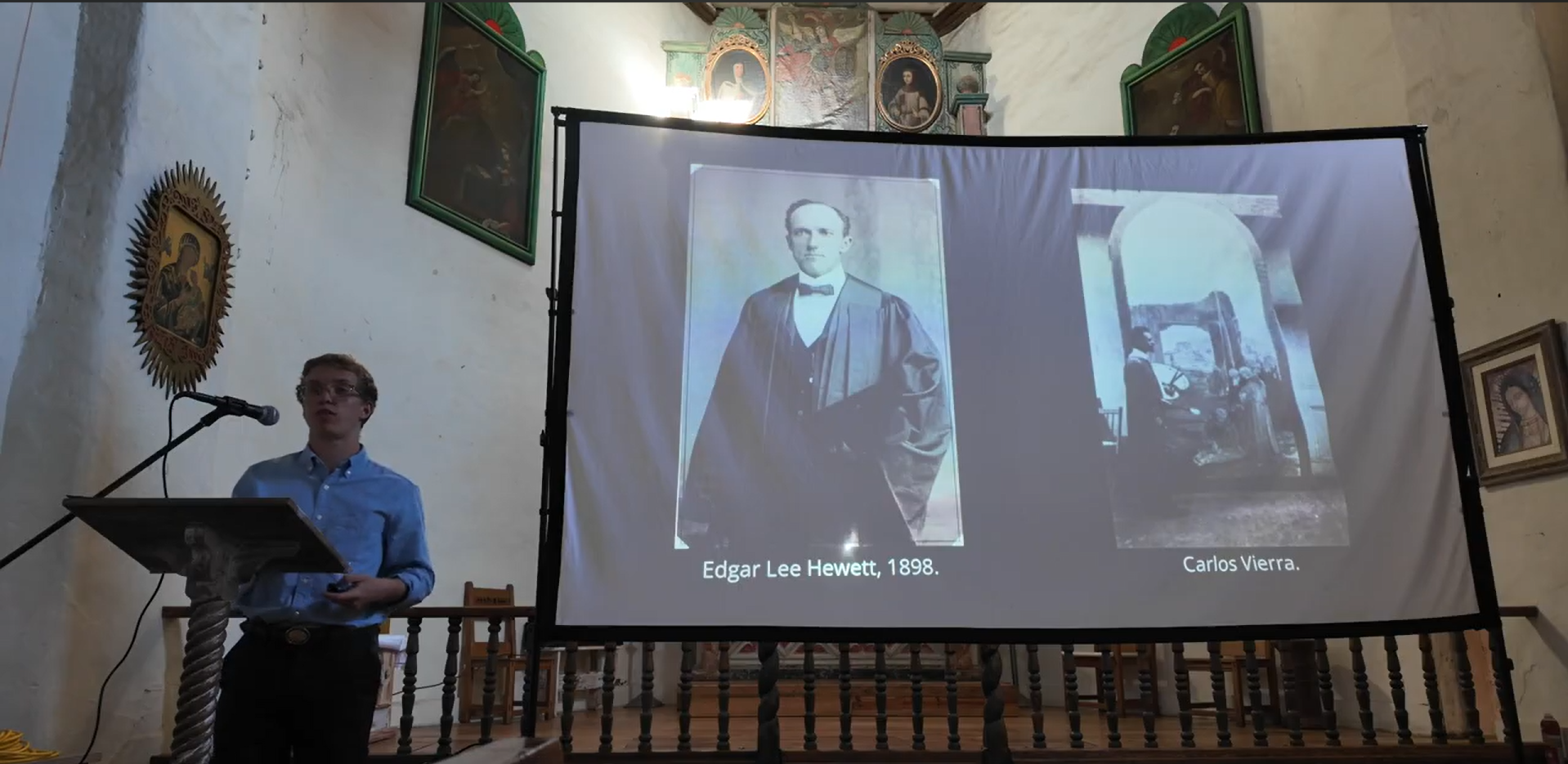
Gabriel Bleichmar is currently a junior at Santa Fe Prep (class of 2027). He hopes to attend a smaller university or college on the east coast or Pacific Northwest, where he hopes to be able to explore his interest in a number of different fields, including history, anthropology, political science, biology, and medicine. In his free time Gabriel is a dedicated tennis player, swimmer, and pianist.
To view his presentation click the link here: video link.