La Virgen Tonantzin: Religious Syncretism in New Mexican Art
Elise Gonzales
Due to the rich cultural landscape of New Mexico, built by an intertwining mixture of Iberian, Catholic, and Indigenous influences, Nuevomexicano religious artwork contains various idiosyncrasies reflecting the complex folk and ritualistic mythology. The bultos and retablos created by santeros in the region often depict both traditionally Catholic figures, like the Virgin of Guadalupe, but with distinctly Puebloan iconography, such as kachinas. This paper examines the extent to which these artworks constitute a kind of religious syncretism – where Catholic and native folk beliefs are melded into one religion, thus keeping elements of Indigeneity alive under colonization – and the theory that the works are an imitation of Spanish cultural art without a true Indigenous impact. While historical in nature, the paper will delve into examples of Nuevomexicano artwork, both from the past and present, to explore the topic and complement the historiography. Though this topic focuses on art, it is a microcosm through which we can examine the dynamics of the New Mexican cultural identity and the influences of dueling communities. Despite ethnic and cultural mixing being clearly evident within the Hispanic communities of New Mexico and greater Latin America, the power dynamics behind those heterogeneous societies did not result in a truly equal syncretism, as this paper will discuss.
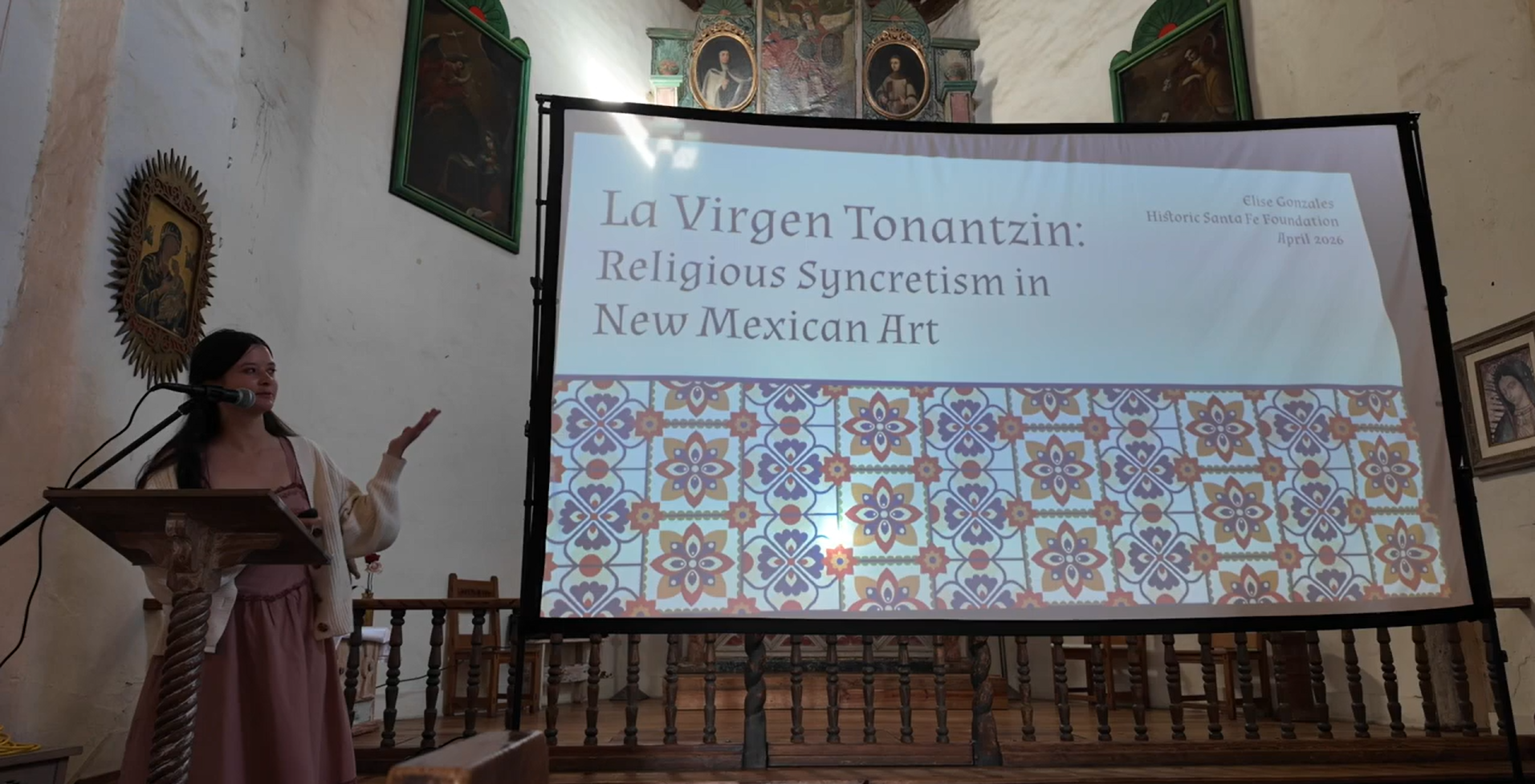
Elise Gonzales is a student at Mandela International Magnet School graduating in 2026. She plans to study international relations after high school and work in humanitarian diplomacy in the future. Outside of school, she works with local nonprofits such as Tomorrow’s Women and Global Santa Fe as a volunteer, leads a tutoring program at her high school, practices her Russian skills, and plays the piano, among other activities.
To view her presentation click the link here: video link.